
Bug bites and insect stings are common occurrences that can cause itching, redness, swelling, pain, and skin irritation. While many bites are mild and resolve with basic first aid, some may lead to infections, persistent discomfort, or allergic reactions that require professional medical evaluation. Understanding the appropriate steps to take after a bug bite can help minimize complications and promote recovery.
Whether you experience a mosquito bite, bee sting, tick bite, or another insect bite, timely care and proper monitoring are essential. The following guide outlines practical first-aid measures, warning signs, and preventive strategies to help you manage bug bites effectively.
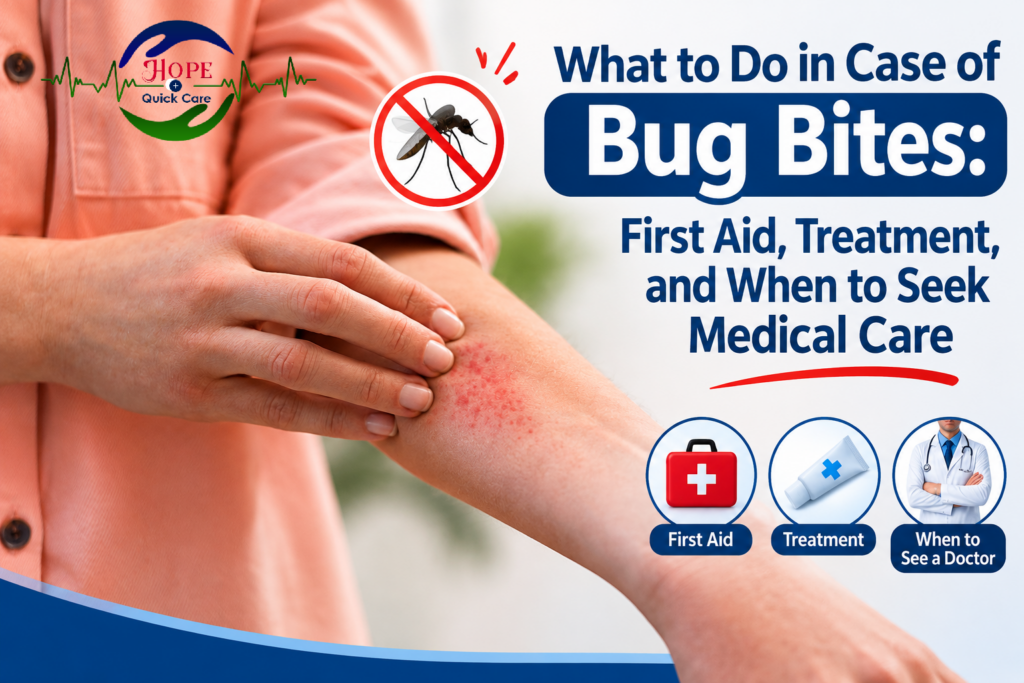
Initial Steps to Take After a Bug Bite
- Move to a Safe Environment
If the bite occurs outdoors, move away from the area to minimize the risk of additional bites or stings. If you suspect the presence of aggressive or potentially dangerous insects, avoid disturbing the area.
- Identify the Insect, If Possible
Identifying the insect may help a healthcare professional assess potential risks and recommend appropriate treatment. However, do not put yourself at risk attempting to capture or handle an insect. If you are uncertain about the cause of the bite and develop concerning symptoms, seek medical advice.
Basic First Aid for Bug Bites
- Clean the Affected Area
Wash the bite or sting site thoroughly with soap and water. Proper cleaning helps remove dirt and reduce the risk of secondary infection. Avoid scratching the affected area, as broken skin can increase the likelihood of infection.
- Apply a Cold Compress
Place a cold compress or an ice pack wrapped in a clean cloth over the affected area for approximately 10–15 minutes. This can help reduce swelling, itching, and localized discomfort. Avoid applying ice directly to the skin.
- Consider Appropriate Over-the-Counter Treatments
Depending on the symptoms, certain over-the-counter products may provide relief:
- Antihistamines: These may help relieve itching and other mild allergic symptoms. Follow the product instructions and consult a healthcare professional or pharmacist when necessary.
- Topical Treatments: Calamine lotion or an appropriate hydrocortisone cream may help reduce localized itching and irritation. Use products according to their directions.
- Pain Relievers: Suitable over-the-counter pain medications may help manage discomfort when necessary. Check product instructions and seek professional advice if you have underlying health conditions or take other medications.
The appropriate treatment depends on the type of bite, the severity of symptoms, and the individual’s medical history.
Recognizing Allergic Reactions and Warning Signs
Most common insect bites cause localized redness, mild swelling, and itching. These symptoms often improve with basic care. However, it is important to recognize signs that require medical attention.
Mild Reactions
Common symptoms include localized itching, redness, tenderness, and swelling. Monitor the affected area and seek medical advice if symptoms worsen or fail to improve.
Severe Allergic Reactions
Symptoms such as difficulty breathing, swelling of the lips, tongue, face, or throat, dizziness, or fainting may indicate anaphylaxis, a potentially life-threatening allergic reaction.
Call 911 immediately if these symptoms occur. If the person has a prescribed epinephrine auto-injector, use it according to their emergency action plan. Do not wait for symptoms to resolve on their own.
When Should You Seek Professional Medical Care?
Although many bug bites can be managed at home, professional evaluation may be necessary in the following circumstances:
- Signs of Infection: Increasing redness, warmth, pain, swelling, pus, or red streaks extending from the affected area.
- Persistent or Worsening Symptoms: Symptoms that continue to worsen, spread, or do not improve as expected.
- Potentially Dangerous Bites or Stings: Suspected venomous spider bites, tick bites, multiple stings, or bites accompanied by unusual symptoms.
- Systemic Symptoms: Fever, significant body aches, widespread rash, or other symptoms that may indicate an infection or insect-borne illness.
Seek urgent medical attention for severe symptoms rather than relying solely on home remedies.
Special Considerations for Different Insect Bites
Bee and Wasp Stings: If a stinger remains in the skin, remove it promptly by scraping it away or using another suitable method without delaying care. Wash the area and apply a cold compress. Seek emergency assistance if symptoms suggest a severe allergic reaction.
Tick Bites: Use fine-tipped tweezers to grasp the tick as close to the skin as possible and pull upward steadily without twisting or crushing it. Clean the area afterward. Monitor for fever, rash, headache, or muscle aches, and contact a healthcare professional if these symptoms develop.
Mosquito Bites: Clean the affected area, apply a cold compress, and avoid scratching. Seek medical advice if a bite is accompanied by fever or other symptoms that could indicate a mosquito-borne illness.
Preventive Measures to Reduce Bug Bites
Preventive steps can help minimize exposure to insects and reduce the likelihood of bites:
- Use Insect Repellents: Choose an appropriate registered insect repellent and follow the product’s application instructions.
- Wear Protective Clothing: Wear long sleeves, long pants, and suitable footwear in areas where insects are prevalent.
- Reduce Mosquito Breeding Sites: Remove standing water from containers, plant pots, and other areas around your property.
- Maintain Clean Surroundings: Keep indoor and outdoor spaces clean, and use appropriate screens or protective barriers where practical.
- Take Additional Precautions Outdoors: Check for ticks after spending time in wooded or grassy areas and take measures to reduce insect exposure.
Conclusion: Get Professional Care for Bug Bites at Hope Quick Care
Proper first aid, symptom monitoring, and preventive measures are essential for managing bug bites safely. While mild reactions can often be treated at home, persistent swelling, worsening irritation, signs of infection, or other concerning symptoms should be evaluated by a healthcare professional. Recognizing the warning signs early can help prevent complications and support appropriate treatment.
Hope Quick Care in Lufkin, Texas, provides medical evaluation and treatment for a range of non-life-threatening concerns, including bug bites, itching, skin irritation, and related symptoms. Our team is committed to delivering attentive, professional care to help patients address their healthcare needs.
If you are experiencing discomfort from a bug bite or need guidance on appropriate treatment, visit Hope Quick Care for an evaluation.
Hope Quick Care
- Address: 2109 East Denman Avenue, Lufkin, TX 75901
- Phone: (936) 299-4138
- Website: www.hopequickcare.com
Walk-in visits are welcome, subject to availability. For symptoms of a severe allergic reaction, call 911 immediately rather than visiting an urgent care clinic.